Showing posts with label BUSINESS AND ECONOMICS. Show all posts

World Bank offers Thailand B30bn loan

HONOLULU, HAWAII: The World Bank has offered loans of US$1 billion, or about 30 billion baht, to Thailand for investment in long-term flood prevention projects.
Deputy Prime Minister and Commerce Minister Kittiratt Na-Ranong revealed the offer after meeting World Bank representatives yesterday.
He is representing Prime Minister Yingluck Shinawatra at the Asia-Pacific Economic Cooperation (Apec) meeting in Hawaii.
Mr Kittiratt said the government is considering the bank's loan offer.
The World Bank also offered to provide advice on water management.
Borrowing from the bank would help guarantee that any projects undertaken would be transparent as the bank would witness the procedure, Mr Kittiratt said.
He said the Asian Development Bank, the Japan Bank for International Cooperation and the Japan International Cooperation Agency have also offered help to the government in various forms, including loans.
The government would be open to offers from foreign investors who wished to form a consortium with Thai investors for flood prevention projects.
Mr Kittiratt said he and Virabongsa Ramangura, head of a strategic committee for reconstruction and development, would visit Japan on Nov 25 to explain the government's flood prevention and rehabilitation plans to Japanese investors.
Meanwhile, Foreign Minister Surapong Tovichakchaikul told an Apec forum that Thailand would get back on its feet from the floods as soon as possible.
Speaking at the Asia-Pacific Business Symposium organised by the East-West Centre, Mr Surapong told the audience the economy would bounce back soon with renewed dynamism given its fundamental strength.
The cabinet had recently approved a relief and recovery plan and package for flood victims.
It was also determined to help investors in flood-hit areas to resume operations as soon as possible.
A budget of about $10 billion has been earmarked for post-flood restoration.
Of that amount, $2 billion will be allocated to big businesses and $5.5 billion to small and medium-sized enterprises, small vendors and individuals.
Mr Surapong said the real economic impact from the flooding was the disruption to the global supply chain, especially in the automobile and computer industries.
Analysts believe these industries could experience a slowdown well into next year.
Despite the crisis, Thailand will strive to be a responsible regional and global player, Mr Surapong said. The country will strengthen its ability to prevent the economic fallout from the flood from hurting the international community.
At meeting with his Philippine counterpart, Mr Surapong agreed the fifth Joint Commission on Bilateral Cooperation, to be held next year in the Philippines, would include a discussion on disaster management among a wide range of topics including trade, investment, energy, education, agriculture and drug controls.
Meanwhile, Thailand and Chile said they hoped that by next year they would be able to finalise free trade agreement talks that began last year to celebrate 50 years of diplomatic relations.
Mr Surapong thanked his Chilean counterpart Alfredo Charme for Chile's donation of $25,000 to the Thai Red Cross to help flood victims.

Cambodia, WTO call on US to drop tariffs

Both Cambodia and the World Trade Organisation this week called on the United States to follow China’s lead in promising zero-tariff treatment to Least Developed Countries.

Chinese President Hu Jintao, in a speech at the G20 summit in Cannes, France, on Friday, announced China would grant duty-free status to 97 per cent of its taxed imports from LDCs such as the Kingdom, provided they had diplomatic relations with China.

The move was designed to prompt among developed countries a similar agreement, which awaits the conclus-ion of the Doha Development Round of trade negotiations among WTO members, Hu said.

Cambodian officials responded positively to Hu’s sentiments, eager to lower trade barriers on the Kingdom’s narrow basket of exports.

“The only one that is still lagging behind is the US,” Minister of Commerce Cham Prasidh said at a presentat-ion on the WTO’s first review of Cambodian trade policy on Monday.

“So [Hu Jintao] is pushing President Obama … to reflect on what the US should do, because now even China can offer that,” he said, chiding the United States for falling short on a trade offer that China had agreed to without obligation.

Although the European Union, Canada and Japan have implemented similar tax preferences for LDCs, the US stalled the treatment after the collapse of the Doha negotiations in 2008.

Cham Prasidh specifically called on the United States to honour the agreement made six years ago in Hong Kong, which was to offer the same tax free status on 97 per cent of taxed imports from LDC countries.

Trade with the US in 2010 reached US$2.45 billion, according to the US Census Bureau, with Cambodia’s exports totalling $2.3 billion. Garments accounted for most of those exports.

Valentine Sendanyoye Rugwabiza, the WTO deputy director-general who spoke at the presentation at the Ministry of Commerce, said China was setting a clear example for other developing countries.

A US trade official that requested anonymity yesterday pushed back against the criticism, saying the world’s biggest economy would meet its obligations in the WTO Hong Kong Declaration.

“It is regrettable that the Doha negotiations are not moving forward at this time, but we are committed to working with others who are willing to do so to find new and creative ways to move ahead,” the official told the Post in an email.

Some experts cast doubt on the potential benefit for the Kingdom from the duty-free status granted by China.

China’s promise – of which details are expected to emerge at a ministerial conference in Geneva next month – could be redundant in terms of Cambodian exports, Edward Gresser, director of the Progressive Economy Project at the Global Works Foundation, said via email from Washington, DC.

Although the move may prove a valuable offer to China’s poorer neighbours, there is no guarantee that the promised duty-free items would include Cambodia’s main exports such as garments, he said.

“So you can’t really be sure how helpful the promise is until you actually see the tariff lines and match them against the light manufactures and agricultural products Cambodia can export.”

Gresser did agree that the United States should adopt an agreement that includes Cambodian and other LDC exports.

However, he said about 99.5 per cent of Cambodia’s trade with the United States in 2010 would not have qualified for duty-free status under a deal similar to the one presently on the table. The United States has generous trade policies with Haiti and African LDCs, and it is lobbying from these countries, as well as from domestic US producers, that has prevented the United States from adopting the agreement, Gresser said.

China’s recent commitment to lowering trade barriers for LDCs was a step the growing power was ready to take, he said.

“So I’d basically say that—assuming the best of the Chinese program—that China would be living up to a responsibility it ought to accept.”

Samut Sakhon factories still unprepared _ FTI Province could lose up to B150bn

Bangkok's neighbouring province, Samut Sakhon, could experience a loss of as much as 150 billion baht as severe floods are expected to hit the province later this week and last about a month, says the Federation of Thai Industries (FTI).
About 35 kilometres southwest of Bangkok, Samut Sakhon is home to nearly 5,000 factories with a total industrial workforce of 500,000, the majority of which are employed in the seafood sector, including SET-listed Thai Union Frozen Products Plc (TUF), one of Thailand's leading manufacturers and exporters of canned and frozen seafood products.
"We expect the entire province will be hit by floods some time this week and the water level might be higher than two metres in some areas," said Apichit Prasoprat, head of FTI's Samut Sakhon province and secretary of the central-region chapter.
More importantly, about half of the factories have yet to exercise flood-prevention measures, probably because they don't think the floods will affect their factories, he noted.
Several factories are located below the road level, putting them at risk.
"In a worst case, we project the floods will last about one month. We need a number of water pumps to drain the water out as fast as we can to minimise damages," said Mr Apichit.
A floodway is being prepared for one side of Rama II Road heading south. Mr Apichit has asked his colleagues at FTI offices in other provinces to help supply hundreds of water pumps.
TUF president Thiraphong Chansiri said the flood has not yet affected the company's operations but it is monitoring the situation very closely.
TUF's plant is located in the Muang district of Samut Sakhon, which lies in the projected path of the water flow from flooded areas to the Tha Chin River. The company erected a sandbag barrier around the factory's premises and has several water pumps on standby. Large machinery and equipment are protected.
Besides preparations to safeguard physical assets, TUF has also implemented flood-relief measures to help affected employees. The company set up an evacuation shelter at the plant, and a team of TUF volunteers are prepared to assist employees evacuating their homes. Employees who cannot travel to the plant can work from home.
Samut Sakhon province, in red, is directly in the flood path.
Prantalay Marketing Co in Samut Sakhon has prepared a depot and cold storage in Ma Klong in neighbouring Samut Songkhram province.
"We've sped up operations to meet year-end orders and so far supplies of shrimp, mainly from the southern and the eastern regions, have not been disrupted," said Anurat Khokasai, the company's marketing and chief operating officer.
"But we are now concerned that increasing rainfall in the south will affect supply, as normally happens late this month."
Prantalay is confident its exports will top its original forecast of 8.4 billion baht, possibly reaching 8.5 billion this year. Domestic sales are projected at 1.2 billion baht. Next year, it anticipates sales growth of 10%, he added.
Inundated industrial estates in Ayutthaya and Pathum Thani are prepared to pump out floodwater, but the water has receded slower than the Irrigation Department forecast, they noted.
At Hi-Tech Industrial Park in Ayutthaya, floodwater is still as high as 1.98 metres, higher than the estate's flood wall.
"We need to wait for it to recede to probably 1.80 metres," said Hi-Tech managing director Thavich Taychanavakul. "Earlier, we estimated the floodwater would stablilise early this month so we could start pumping the water out by this Thursday."
It will take about 14 days to drain 10 million cubic metres from the estate. Hi-Tech expects to complete the task by Nov 25, he added.

Bangkok authorities have put the Bang Chan area, industrial estate, on alert

Northern run-off was closing in on Bang Chan industrial estate yesterday as the Bangkok Metropolitan Administration issued an evacuation advisory for Bang Chan sub-district.
Vulnerable spots appear to be in the north and the northeast of the estate which are taking in advancing runoff from the street and water from Khlong Sam Wa which continues to rise.
Bangkok Governor Sukhumbhand Paribatra issued an evacuation advisory for Bang Chan, bringing the total number of districts on evacuation alert to 12.
Defence Minister Yutthasak Sasiprapa said the government would try to protect the Bang Chan industrial estate as well as the one in Lat Krabang at all costs.
Seven industrial estates in Ayutthaya and Pathum Thani have been inundated despite government assurances they were well protected.
"They [Bang Chan and Lat Krabang] are the last two we have to defend. We tried and failed in Ayutthaya and Pathum Thani.
"They are two important locations we must save or all the government's credibility will be lost," he said.
Bang Chan industrial estate houses more than 90 factories including firms like Nestle and Farmhouse bread producer President Bakery Plc, which employ more than ten thousand workers.
Floodwater yesterday seeped into the estate and flooded its streets. Flooding on Mom Chao Sangangamsupradit Street was about 20cm deep while Seri Thai Road was under 10-20cm of floodwater.
In the northern section of the estate, water in Bueng Krathiam also crept in from Ram Intra Road and Khlong Phraya Suren, flooding an area in front of Chinsan Electronic Industrial Thailand factory.
Workers at Bang Chan Industrial Estate in Min Buri district are frantically erecting flood barriers to try to save the important economic area from approaching inundation.
The floodwater, which was 10-20 cm high, was drained into the industrial estate's water drainage system before being diverted to Khlong Lo Lae, Khlong Ban Chan and then to Khlong Saen Saep.
Despite water entering the estate, the factories remained dry yesterday. as troops from the First Army Regionquickly reinforced the flood barrier.
Maj Gen Walit Rojanaphakdi, deputy commander of the First Army Region, yesterday met with Bang Chan industrial estate staff and the business operators.
He called for a 24-hour watch on the water level in Khlong Saen Saep which runs along one side of the estate.
The water in the canal yesterday rose to 88cm, about 3cm higher than on Sunday, and continued to rise.
The canal will overflow if the water exceeds the 118-cm mark.
Meanwhile, the BMA yesterday ordered the evacuation of the Jorakebua sub-district in Lat Phrao which is situated next to Khlong Lat Phrao canal.
The evacuation order covered areas along Lat Plakhao Road, Lat Phrao-Wanghin Road north of Prasert Manukit Road as well as Sena Nikhom Road.
The governor also declared more areas under close watch for possible flooding, that included communities along Khlong Bang Sue canal in Sam Sen Nok sub-district, ones along Khlong Lat Phrao canal, and areas on Lat Phrao Road from Lat Phrao 34 Road to Lat Phrao 46 Road.
In western Bangkok, many sections of Bang Bon Road were covered by 15cm of floodwater which was heading for Ekachai and Rama II roads.
MR Sukhumbhand said he was concerned the water may reach Rama II Road in Bang Khunthian district.
He said the BMA would try to drain the run-off into Khlong Maha Chai canal to stem water flow.
The governor said he disagreed with a proposal by the Samut Sakhon governor to dig channels on Rama II Road to accelerate the drainage of floodwater in western Bangkok and its outskirts.
He said the Royal Irrigation Department should drain the floodwater.
MR Sukhumbhand also said yesterday that about 800,000 people in Bangkok were living under 80cm of water in 470 locations.
He said officials were providing assistance and supplying foods and drinking water to those who did not evacuate.
Most of those stranded in their homes were in Sai Mai district, and in Nong Khaem district.
Nationwide, 527 people have died from flood-related incidents while two have been reported missing.

Thailand New industry recovery panel

The Industry Ministry has been assigned by Prime Minister Yingluck Shinawatra to set up a subcommittee for the restoration of the seven industrial estates ravaged by flooding in Ayutthaya and Pathum Thani provinces.
Industry Minister Wannarat Channukul said a meeting would be held this afternoon to discuss the matter at the Ayutthaya city hall.
The meeting would also be attended by Deputy Prime Minister Kittiratt Na Ranong, the governor of Ayutthaya, and the managements of the seven industrial estates.
Mr Wannarat said in the initial stage an additional 350 water pumps would be installed at the industrial estates to pump out the water.  Reconstruction was expected to begin in 45 days.
"We will first pump the water out, because the machinery at some factories can be repaired and put back in operation. 
"For factories which need to buy  replacements, import taxes will be reduced.  In the event foreign experts must be brought in, we will facilitate the process of acquiring an entry visa," he said.
The industry minister believed eight threatened industrial estates in the east, including Bang Chan, Bang Pu, and Lat Krabang, would be safe from flooding.
He said the prime minister had signed in approval of adjustments to tax privileges to promote investment at the affected industrial estates.
The measure was expected to be tabled for the Board of Investment to consider this week, he said.

436 bank branches of thailand are now closed

Thirteen commercial banks and a financial firm reported that they had now temporarily closed a total of 436 branches in flood-hit provinces, the Bank of Thailand reported on Tuesday.
Of the total, 155 outlets are in Pathum Thani, 146 in Bangkok, 69 in Nonthaburi, 35 in Auttthaya, 19 in Nakhon Pathom, 10 in Nakhon Sawan,and 2 in Chai Nat,  the central bank said.
Services at 4,338 ATMs operated by the banks were also halted.
Of the total, 1,431 are in Pathum Thani, 1,213 in Bangkok, 734 in Nonthaburi, 663 in Ayutthaya, 56 in Nakhon Sawan, 49 in Samut Prakan and the remainder scattered through other flooded towns.
The central bank on Wednesday, Oct 26, reported the banks had  closed   295 branches.

Thai government's rice mortgage scheme made its debut yesterday

The government's rice mortgage scheme made its debut yesterday.
Deputy Commerce Minister Phum Saraphol, left, visits Sripattanapanich Rice Mill in Nonthaburi to observe the implementation of the government’s rice mortgage scheme that began yesterday. APICHIT JINAKUL
Prime Minister Yingluck Shinawatra officially launched the project, a key policy platform of the Pheu Thai Party, at the Commerce Ministry.
She insisted that the project, which has been subject to heavy criticism by academics and technocrats as being vulnerable to corruption, is a means to boost farmers' income.
The prime minister also said the government has included many new measures in the scheme to ensure it is fair and free of cheating. These include the issuance of rice ownership documents, strict monitoring of cross-province transport of paddy and ultimately DNA testing to prevent cheaper rice from neighbouring countries being mortgaged under the programme.
Commerce Ministry permanent secretary Yanyong Phuangrach said farmers found violating the rules of the mortgage programme would be black-listed and barred from taking part in it for life.
Observing the first day of the mortgage scheme at Sripattanapanich Rice Mill in Nonthaburi, Deputy Commerce Minister Phum Saraphol said not many farmers came in yesterday. But the upside was it was not too crowded and some farmers could finish the mortgage process in a single day instead of three.
On concerns about the smuggling of rice from neighbouring countries, which sells at lower prices than the mortgage rate, Mr Phum said the police, Department of Special Investigation and provincial authorities would have to find ways to prevent such fraud.
He said technology is available that could check the rice DNA to determine if it is grown in Thailand or not, based on the original seeds given to farmers.
Bangkok MP Chuvit Kamolvisit on Thursday showed two video clips purportedly revealing rice smuggling from Cambodia into Thailand via Sa Kaeo province while the House was discussing the rice mortgage scheme.
Kittiratt Na-Ranong, deputy prime minister and commerce minister, said the government has set no target for the volume of paddy to be mortgaged under the programme and it will allow some room for free rice trading.
He said many rice millers chose not to participate. They can compete with the government to buy paddy from farmers. The same goes for rice exporters.
He said it was quite certain that the first-crop paddy to be mortgaged under the scheme would not reach the targeted 25 million tonnes because of damage caused by the widespread floods.
The commerce minister assured farmers that they need not worry about the volume of paddy the government will be able to buy or the adequacy of the funds.

Deputy PM Kittiratt (inset) thinks the government's rice scheme will boost rice prices and that the cost of the price pledging programme will be lower than the previously estimated B400bn, as a business survey

Deputy Prime Minister for economic affairs Kittiratt Na-Ranong is confident that the government’s rice scheme will boost local rice prices and that the cost of the rice price pledging plan will be lower than expected, but a poll of economists concludes that corruption is inevitable.
Deputy Prime Minister for economic affairs and Commerce Minister Kittiratt Na-Ranong (Photo by Kosol Nakachol)
He predicted on Wednesday that the government's rice mortgage scheme would boost rice prices and as a result less than 15 million tonnes of paddy would have to be mortgaged by farmers.

"Therefore, the cost of the rice price pledging programme will be less than the previously estimated 400 billion baht," Commerce Minister Kittiratt said.

Deputy government spokeswoman Anuttama Amorwiwat said the cabinet meeting yesterday approved a plan for the Bank for Agriculture and Agricultural Cooperatives to allocate a budget of 3.82 billion baht to the Marketing Organisation for Farmers for funding the rice mortgage scheme until it gets additional budget funding in the 2012 fiscal year.

It is expected that the marketing agency would be able to absorb about 10 million tonnes of mortgaged paddy from the 2011/12 harvest before the 2012 fiscal budget funding kicks in, she added.

The cabinet also approved the signing of amended memorandums of understanding on government to government rice sales between Thailand and Indonesia and between Thailand and Bangladesh.

Under these deals, the Thai government agrees to sell a maximum of one million tonnes of 15 to 25 per cent white rice to Indonesia and Bangladesh annually, depending on the rice output in each country and the rice prices on the world market, said Ms Anuttama.

The MoU between Thailand and Indonesia will be effective from 2012 to 2016, while the memorandum with Bangladesh is effective from 2011 to 2016. These agreements guarantee that Thailand will certainly have rice export markets in the long-term, she said.

Deputy Commerce Minister Phum Saraphol said a total of 667 rice millers had agreed to join the rice mortgage programme. He confirmed that the pilot rice pledging scheme will start on Friday, Oct 7, in 31 provinces.

Meanwhile, the opposition Democrat Party has opened a centre to hear any complaints about the government paddy pledging programme, which is set to start on Wednesday, Oct 7.

Shadow deputy commerce minister Warong Detkijwikrom said, a Democrat MP for Phitsanulok, said this was decided at today's meeting of the Democrat Party's shadow cabinet chaired by party leader and former premier Abhisit Vejjajiva.

He said the meeting expressed concern the paddy pledging programme would be plagued with corruption and the people would not benefit from it.

The meeting agreed to set up a centre where people with grievances could file complaints.

Mr Warong said the centre is chaired by Apirak Kosayodhin, the shadow commerce minister, and he is deputy chairman.

People can file complaints with the centre seven days a week via hotline 02-2700036 from 8am to 6pm.
Photo by Tawatchai Kemgumnerd
Bangkok Poll, run by Bangkok University, said on Wednesday that most economists polled recently believed there would definitely be corruption in the government's rice mortgage scheme.

The poll on "Future of the Rice Mortgage Project: Who Loses, Who Gains" involved 67 economists at the country's 31 leading economic research and analysis agencies between Sept 26 and Oct 3.

The pollsters reported that 82 per cent of the respondents believed corruption would definitely taint the scheme, and 86 per cent felt that rice millers and silos would gain the most benefit, not farmers.

A total of 74 per cent of the economists thought that consumers would be the biggest losers, and 60 per cent said the farm income guarantee programme of the Democrats was better, according to the pollsters.

Slightly more than half (51 per cent) of the respondents believed the rice mortgage prices the farmers would get would be lower than the promised prices, 39 per cent of them disagreed.

Asked whether the price of milled rice on the world market would higher than the price the government plans to sell at in 2012, 57 per cent of the economists said probably not, 19 per cent of them said no, and about 18 per cent believed it was possible.

On the question about the groups that would gain the biggest benefit from the rice plan, 87 per cent of the respondents said rice millers and silos, followed by politicians (61 per cent) and rice exporters (43 per cent).

And about 75 per cent said consumers would lose the most, followed by farmers (42 per cent) and the government (37 per cent).

Asked about what was the best solution to the low rice prices problem that they would suggest to the commerce minister, 59.7 per cent of the economists said there should be no price intervention and price guarantee at a suitable price comparing to the cost scheme should be introduced as the Democrats had implemented the farm income guarantee policy in the past.

Only 17.9 per cent of them agreed that the supply side management should be used as it is going to be done under the government’s rice mortgage programme.

'Multiple parties' interested in Yahoo!

http://www.channelnewsasia.com/imagegallery/store/phpNuyrmH.jpg
NEW YORK: Yahoo! is fielding inquiries from "multiple parties" who have expressed an interest in the struggling Internet company, officials said Friday in a memo sent to employees and obtained by AFP.

The board of directors of the Sunnyvale, California-based firm is carrying out a "strategic review" in order to "help return the Company to a path of robust growth and industry-leading innovation," the memo said.

"At this point, we cannot offer many specifics about the Board's review; we've just gotten started," added the memo, written by the company's two founders, David Filo and Jerry Yang, along with board chairman Roy Bostock.

The review was announced at the same time as the abrupt firing of chief executive Carol Bartz earlier this month, and comes amid reports that the board is looking at selling all or part of the company.

Advisers to Yahoo! were "fielding inquiries from multiple parties that have already expressed interest in a number of potential options," the memo said.

"We will take the time we need to select and structure the best approach for the company, its shareholders and employees," it added.

The senior Yahoo! officials also told employees they were looking for a replacement for Bartz, but gave no further details about how far they had progressed in their search.

Bartz replaced Yang as chief executive two and a half years ago after he rejected a US$47 billion takeover offer from US software giant Microsoft.

She significantly cut costs at Yahoo! but was faulted by investors and analysts for failing to articulate a clear strategic vision for the company on the quickly shifting Internet landscape.

US stocks end week with losses

http://www.channelnewsasia.com/imagegallery/store/phpdaaMTa.jpg
NEW YORK: An estimated $1 trillion was wiped off the value of US stocks this week, amid heightened fears that the world economy is heading for another recession.

After a string of warnings that Europe and the United States must do more to put their economies in order, the Federal Reserve on Wednesday provided the straw that broke the market's back.

The bank's warning, that there are "significant downside risks to the economic outlook," sent stocks into a tailspin with the Dow Jones industrial average losing nearly 800 points over the next 24 hours.

By the end of Thursday an estimated $103 billion had been wiped off the value of that 30-member index.

But the sea of red did not end with the blue chips.

According to figures from the Wilshire 5000, the broadest index available for the US equity market, around $1 trillion was lost during the week.

That made it the second worst week since October 2008 -- the height of the financial crisis.

Stocks eventually halted their downward slide on Friday, with the Dow ending the day just above the break-even mark despite ongoing gloom about the state of the global economy.

The bounce-back came despite a tepid view of policymakers' responses to the rekindled crisis.

A pledge from G20 finance ministers to mount a powerful response to global recovery threats appeared to do little to assuage fears.

The finance chiefs noted "heightened downside risks from sovereign stresses, financial system fragility, market turbulence, weak economic growth and unacceptably high unemployment."

That drew a muted response on Wall Street.

"The market is worried about the European situation and that the officials are moving too slow in terms of their action of getting things under control," said Scott Marcouiller of Wells Fargo Advisors.

"It's fear and uncertainty, the two things that the markets hate the most, it is continuing to dominate the marketplace."

The Dow ended the week down 6.4 per cent at 10,771.48 points.

The broader S&P 500 fell 6.5 per cent to 1,136.43 and the tech-heavy Nasdaq Composite fell 5.3 per cent to 2,483.23.

Traders predicted more choppiness ahead.

"It's going to be a period of tremendous volatility," said Gina Martin of Wells Fargo Securities.

"It will depend on what happens with policy in Europe, fiscal policy in the US, and probably the eco data and how much weaker the eco data gets.

"We're starting to price in weaker data, it's just a matter of how much weaker the economy gets. If the data says a recession is more likely the market will suffer."

Europe banks "can absorb greek default"

http://www.channelnewsasia.com/imagegallery/store/phpYZkmyX.jpg
WASHINGTON: Europe's banks could absorb a Greek bond default without much trouble, but contagion from such an event could be a more serious problem, the International Monetary Fund's Europe chief said Friday.

"European banks would not have that much trouble, contrary to what people sometimes think, absorbing any losses related to Greece," said Antonio Borges, director of the Fund's European Department.

"Of course it would be costly, of course it would damage their profitability, but it would not be a dramatic blow, by any stretch of the imagination."

Speaking during the IMF-World Bank annual meeting, Borges stressed that it was only a theoretical issue, and that in terms of dealing with challenges in Europe, "we're beyond that really."

"The problem today is that we are beyond Greece, and the real question about the problems in Greece is, what will happen in the rest of Europe, and if the problem mushrooms. And that's why the markets are nervous."

He stressed the need to help Greece and the rest of Europe shore up their finances and banks "to make sure that there is no contagion."

Europe's banks generally, and French banks in particular, have seen interbank funding lines tightened and their shares sold off by investors worried about their holdings of sovereign debt from Greece and the eurozone's other financially embattled governments.

Under a July 21 plan, private holders of Greek debt have tentatively agreed to a 21 per cent "haircut" on what Greece has to pay them to service the debt, for roughly 50 billion euros ($67 billion) in savings for Athens.

On Friday Dow Jones reported that senior Greek officials said that some of the country's creditors think the size of the haircut needs to be doubled to allow Athens to close its fiscal deficit.

But the officials said Greece will try to stick to the existing plan.

Global stocks see-saw after G20 pledge

http://www.channelnewsasia.com/imagegallery/store/phpcOaceB.jpg
NEW YORK: Global stocks see-sawed in volatile trading on Friday after a G20 pledge to tackle eurozone debt and amid rumours the European Central Bank could provide troubled banks more support.

Many markets halted their downward slide, with the Dow Jones Industrial Average ending marginally up despite ongoing gloom about the state of the global economy.

The Dow was up 0.35 per cent, 38 points above the previous session's close, reaching 10,771.48 points at the closing bell.

Across the world indexes hovered on or near the break-even mark, a sign of lingering uncertainty.

After morning gains and steep afternoon losses, London's FTSE-100 index closed up 0.50 at 5,066.81 points, while in Frankfurt the DAX, which dropped below the key psychological level of 5,000 points during the trading session, posted a gain of 0.6 per cent to 5,197 points.

"The market is worried about the European situation and that the officials are moving too slow in terms of their action of getting things under control," said Scott Marcouiller of Wells Fargo Advisors.

"It's fear and uncertainty, the two things that the markets hate the most, it is continuing to dominate the marketplace."

In Paris the CAC 40 rose 1.02 per cent to 2,8010.11 points with beleaguered banks Societe Generale and BNP Paribas up more than seven per cent.

Michael Hewson of CMC Markets in London said bank shares rose on "vague talk that policymakers might be considering boosting the (eurozone rescue fund) EFSF" after Dutch central banker and ECB member Klaas Knot "suggested that it would need to be increased in excess of one trillion euros or more."

Hewson added that a pledge by 20 finance ministers that they will implement a full timetable for a rescue plan by the Cannes G20 summit in six weeks also boosted sentiment.

"The truth is until we see what, if anything comes out of this weekend, sentiment is likely to remain fragile," he said.

The Group of 20 major economies had vowed to mount a powerful response to the rising challenges as world markets reel from the fast-moving debt crisis in the eurozone.

The pledge, made in an unexpected statement, came after world leaders ramped up pressure on Europe to take decisive action to contain its debt crisis as markets spun out of control.

It failed to calm Asian markets, however, which plummeted for a second day as the dollar rose against regional currencies.

Seoul slumped by 5.7 per cent, Hong Kong by 1.3 per cent, Sydney by 1.6 per cent, Taiwan fell 3.6 per cent, while Shanghai lost 0.4 per cent. Tokyo was closed for a public holiday.

"G20 finance ministers passed up a golden opportunity to soothe the markets as talk of tackling the financial crises fell short of any decisive action," said ETX Capital trader Manoj Ladwa.

"Highlighting the obvious fragility of the financial system without clear cut measures to avert a meltdown is unlikely to instill confidence in investors."

The euro rose slightly to $1.3511 from $1.3466 on Thursday, when it struck an eight-month low point of $1.3385.

The euro also nudged up to 103.14 yen from 102.60 on Thursday, when it also hit a ten-year trough of 102.22.

The dollar rose against the yen to 76.34 from 76.20 yen on Thursday.

Yields on 10-year German government bonds briefly fell to a new record low of 1.640 per cent on safe-haven sentiment before ending the day at 1.745 per cent. US benchmark bond yields also hit a record low at 1.671 per cent before rising to 1.778 per cent.

Global equities had slumped sharply on Thursday as fears mounted that the world was heading for a fresh economic downturn, sparking a rush for safe-haven assets like the dollar and yen.

The mood darkened after the US Federal Reserve warned Wednesday of serious downside risks to the world's biggest economy and announced a $400 billion plan to boost the economy, a move that disappointed markets.

The central bank's forecast piled the pressure on investors, who are already on red alert over heightened fears that Greece is on the verge of default -- which could infect other economies and spark another global financial crisis.

In Paris, analysts from Credit Mutuel-CIC said that Europeans have to prepare for a Greek default because "no one believes in the ability of the Greek people to withstand the austerity spell."

They said: "Let's admit the inevitable and then we can turn the page and work on the next chapter."

Japan records huge trade deficit as imports soar

http://www.channelnewsasia.com/imagegallery/store/php9yg2S2.jpg
TOKYO: Japan recorded a much larger-than-expected trade deficit in August as imports soared despite an upturn in exports, official data showed on Wednesday.

The deficit reached 775.3 billion yen ($10 billion), the biggest-ever red-ink figure for the month, according to the finance ministry.

It reversed the year-before surplus of 63.8 billion yen and was much bigger than deficits of less than 300 billion yen projected by economists.

Exports rose 2.8 percent on August 2010 to 5.36 trillion yen on higher shipments of automobiles, machinery and ships, the first year-on-year rise in six months.

Japanese exports had tumbled after the March earthquake and tsunami damaged manufacturing facilities and disrupted supply chains, while triggering the world's worst nuclear accident since Chernobyl at a plant on the northeast coast.

Imports jumped 19.2 percent to 6.13 trillion yen, an increase for the 20th consecutive month, due to rises in crude oil prices and higher purchases of liquefied natural gas by utilities companies.

Japanese power companies have stepped up imports of fossil fuel as many nuclear reactors went offline after the disaster.

US economy may be weak "for years to come": IMF

http://www.channelnewsasia.com/imagegallery/store/phprrSAJ7.jpg
WASHINGTON: The International Monetary Fund on Tuesday warned the US economy could remain weak for years to come, describing a recovery stalled amid unrelenting headwinds and in dire need of a push from government.

The Washington-based fund slashed its US growth forecasts for this year and next, while warning of the need for more government stimulus in the short-term as well as a credible longer-term plan to cut spending.

"The US economy is struggling to gain a strong foothold, with sluggish growth and a protracted job recovery," the IMF said, as it cut US growth forecasts for this year by a full percentage point to a paltry 1.5 percent.

That is a slower rate than projected for the crisis-wracked eurozone.

Citing crushed US consumer confidence and battered business sentiment -- as well as ongoing crises in the housing and financial markets -- the IMF said "growth will be modest relative to historical averages for years to come."

That bleak assessment is certain to fuel fears that the United States is destined for a Japan-like "lost decade" of growth, particularly as the White House and Congress continue to bicker over how to cut debt levels and how to stimulate growth.

"The first priority for the US authorities is to commit to a credible fiscal policy agenda that places public debt on a sustainable track over the medium term, while supporting the near-term recovery."

As President Barack Obama and his Republican foes fight over how to put the budget back on an even keel, the IMF said a solid deal was essential both for the US, and for the global economy.

"Delays in accomplishing an adequate medium term debt-reduction plan could suddenly induce an increase in the US risk premium, with major global ramifications."

By contrast a deal could pave the way for sounder short-term fiscal policies.

"This would allow the near-term fiscal policy stance to be more attuned to the cycle, for example, through temporary stimulus to support labour and housing markets, state and local governments, and infrastructure spending."

The IMF's gloomy assessment of the US economy comes as Washington girds to enter a presidential election year, making political compromise all the more tricky.

But the pessimistic outlook is shared by private economists.

"In an economy like that of the United States where around 60 percent of the economy is consumption, confidence is perhaps the most important ingredient requisite for economic growth and an improving job market," said Jason Schenker of Prestige Economics.

"Without confidence and without spending, deflation and recession are major risks."

IMF says global slowdown worse than thought

http://www.channelnewsasia.com/imagegallery/store/phpq3aTOw.jpg
WASHINGTON : The global economy is much weaker than believed just months ago, and growth will pick up only slightly next year, the International Monetary Fund said on Tuesday.

The IMF lowered its growth forecasts for the global economy to 4.0 percent for 2011 and 2012, saying activity had "weakened significantly," but warned of a return to recession if Western leaders fail to get their economies back on track.

"The evidence points to continued, uneven growth," the IMF said in a twice-yearly outlook report.

The global economy, which rebounded in 2010 following the 2008-2009 Great Recession, has been dragged down by problems in the advanced countries, particularly the United States and the eurozone, it said.

And emerging market economies that have been the recovery's driving force, such as China and India, will not escape unscathed from the weakness in the advanced economies, the Washington-based lender said.

The IMF's World Economic Outlook report said global growth will be half a percentage point lower than it estimated in June, and well below the 5.1 percent pace in 2010.

"Anaemic" consumption in advanced economies and spiking financial volatility over worries about US and eurozone public debt have put the brakes on growth.

The slower recovery in advanced economies this year was "a development we largely failed to perceive as it was happening," acknowledged Olivier Blanchard, the chief economist of the 187-nation institution.

A large increase in fiscal and financial uncertainty gathered steam in August, roiling financial markets as investors watched political gridlock in Washington over US debt and deficits and the spreading contagion of Greece's debt crisis in the eurozone.

"Markets have clearly become more sceptical about the ability of many countries to stabilize their public debt," Blanchard said in a statement.

"Strong policies are urgently needed to improve the outlook and reduce the risks," he said.

The United States, the world's largest economy, suffered the most notable downgrade - about a percentage point - with gross domestic product growth estimated at 1.5 percent this year and 1.8 percent in 2012.

For the 17-nation eurozone, GDP growth was projected to slow by about a half point, to 1.1 percent in 2012.

Japan's economy is rebounding from the March earthquake and tsunami disaster, the IMF said, and is expected to contract 0.5 percent this year, less than previously estimated, before clocking in 2.3 percent growth in 2012.

For the emerging market and developing economies, the IMF said that capacity constraints, policy tightening and slowing foreign demand would result in slightly slower GDP growth of 6.1 percent in 2012.

China will continue to lead the world's growth but at a modestly slower pace - 9.0 percent next year - while India was projected at a 7.5 percent rate.

Growth downgrades were nearly universal, from Russia, Latin America and Sub-Saharan Africa to the Middle East and North Africa.

Rising oil prices, believed to be pushed up by the political unrest in the Arab world, also provided an unexpected shock to the global economy but appear to be unwinding, the IMF said.

The forecasts assume a barrel will cost an average $100 in 2012, compared to $79.03 in 2010.

The IMF warned that a negative feedback loop between low growth and fiscal and financial stability is at the heart of risks facing the world economy.

Worries about sovereign debt have spread amid slowing growth, extending to the banks holding those government bonds, mainly in Europe.

"Policy indecision has exacerbated uncertainty and added to financial strains, feeding back into the real economy," the report said.

"WEO projections assume that policymakers keep their commitments and the financial turmoil does not run beyond their control, allowing confidence to return as conditions stabilize."

If they fail to do that, "the major advanced economies could fall back into recession," the IMF said.

"Vulnerable sovereigns are prone to a sudden loss of investor confidence in their debt sustainability if fundamentals deteriorate sharply."

The IMF recommended a three-pronged approach to boost growth. Fiscal consolidation that is fast enough to inspire credibility but not so fast it will kill growth, as well as measures to prop up domestic demand, such as continued low interest rates.

The second leg is financial measures, including strengthening banks, while the final leg is rebalancing global trade flows. For example, the United States, should increase exports and China needs to increase imports.

"Only with this global rebalancing can we hope for stronger growth in advanced economies and, by implication, for the rest of the world," Blanchard said.

People at Thai Cambodia Border


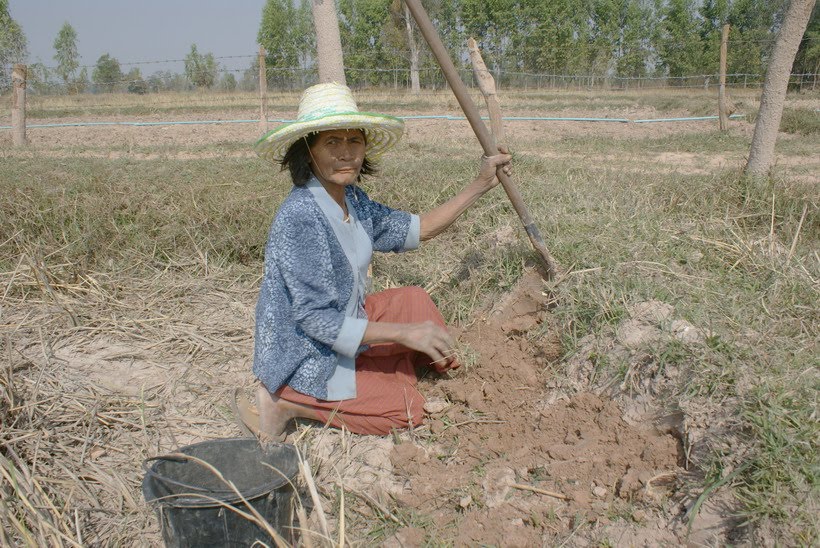
An old couple in a Surin village smile as they prepare a meal but are they truly poor? This article examines the details of their daily lives to suggest whether Thai society runs at two speeds, for the urban elites who cream off the wealth and the country people who have been left far behind.


This picture shows a typical newly built house in our soi.


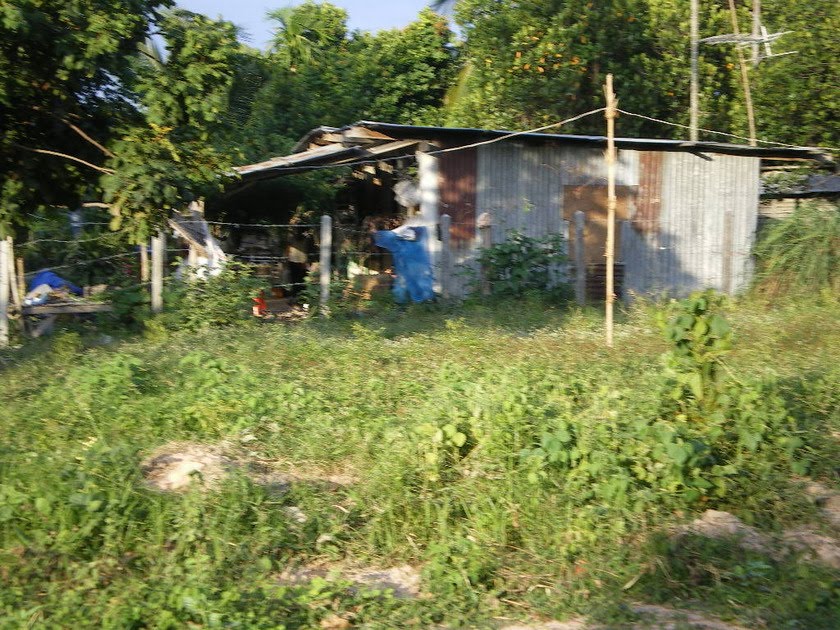
The old couple live and sleep under these grass roofs.


A small electric pump supplies them with water.


An 'iron buffalo' is expensive but is needed to till the fields.


The harvest is kept in sacks in a handsome rice barn.


Every night the buffaloes are brought back to this barn.


Every day is spent taking the animals out to find grazing.


Hot hours are spent digging crabs to glean a few mouthfuls.


This, the poorest house in our soi, looks pretty desperate.

The Richest Countries Of Asia for 2011

The top ten 10 countries with highest GDP are enlisted here. These nations are the richest or wealthiest in Asia with respect to Gross Domestic Product.


China is richest country in Asia having nominl GDP of 8.8 trillion dollars when measured on Purchasing Power Parity. GDP per capita of china is $ 6,100. Since economic liberalization which began in 1978, the PRC’s investment- and export-led economy has grown 70 times bigger and is the fastest growing major economy in the world.
Japan is the second richest country of Asia. GDP (PPP) of Japan is $ 5 trillion and GDP (Per capita) is $ 32,600. Japan is the world’s fourth largest exporter and fifth largest importer. Japan owns 11 top Companies in the world out of top 100.
India is the third richest country in Asia having $ 3.548 trillion GDP compared on Purchasing Power Parity. GDP per capita of India is $ 3, 1000 with growing population. India is the third wealthiest nation of Asia having a fastest growing economy which is progressing at a rate of 7% per year.
Russia is the fourth richest country of Asia having $ 2.103 trillion GDP (Purchasing Power parity) in her account. Russia mostly earns her revenue from Oil, Gas, Timber and Metals and these exports account for 80% of her exports. Russia has sixth largest economy in the world while fourth largest in Asia.
South Korea GDP slowed to 2.2% in 2008 and declined 0.8% in 2009. Now its GDP (PPP) is 1.343 trillion whereas GDP per capita is $ 27,700. South Korea is a technological giant in the world. South Korea has the most skilled labor and technology oriented exports. It is the eight largest exporter in the world.
Indonesia is the largest economy in Southeast Asia. Indonesia’s estimated GDP (PPP) for 2009 was $ 968.5 billion while GDP per capita is $ 4,000. Major economic sectors are Services Sector (45.3% of GDP), Industrial Sector (40.7%) and Agricultural Sector (14.0%).
Iran is seventh richest country of Asia having $ 876 billion GDP (Purchasing power parity) while GDP per capita of Iran is $ 12,900. Despite of UN sanctions of Iran due to Iran’s allaged nuclear programe, Iran economy is progressing on stable grounds.
Turkey:- GDP (Purchasing power parity) of Turkey is $861.6 billion while GDP per capita is $ 11,200 and population is 76,805,524. So Turkey is the eigth wealthiest state in the world. Turkey is popular for her fruit export and tourism.
Taiwan is ninth richest country of Asia having $ 693.3 billion GDP (PPP) in her account. Taiwan is among the smallest countries of Asia and it is one of the industrialized developed countries known as the “Four Asian Tigers”.
Saudi Arabia is tenth richest country of Asia having $ 581.3 billion GDP (PPP) in her account. Saudi Arabia’s population is 28,686,633 with $ 20,300 GDP per capita. The major product of Saudi Arabia is “Black Gold” or oil which accounts for 90% of her revenue. She is one of the largest exporters in the world.